
Home › Pool tips & guides › Cleaning the waterline
The waterline is the most exposed part of the liner: grease, sun creams, dust and limescale build up there. Regular, gentle cleaning is enough, as long as you use the right tools.
- How often: 2 to 3 times a week during the season.
- Tools: sponge or soft cloth, damp.
- Product: a liner-safe waterline cleaner.
- Avoid: household products, solvents, scouring pads, wire brushes.
Why clean often
A fresh deposit comes off easily. A deposit left to build up for weeks needs stronger products and more rubbing, which the liner's lacquer does not tolerate well. Light, frequent cleaning is therefore less aggressive than a big clean every now and then.
The method, step by step
- If needed, lower the water level slightly to expose the waterline (never empty the pool).
- Apply the waterline cleaner to a damp sponge or soft cloth, not directly onto the liner in large amounts.
- Rub gently, a small area at a time.
- Leave it for the contact time shown on the label, then rinse with pool water.
- Bring the water back up to level and let the filtration run.
Which product should I choose?
| Dirt | Type of cleaner | Note |
|---|---|---|
| Greasy marks, sun cream, dust | Alkaline cleaner | The gentlest for regular use |
| White deposit, scale | Acid cleaner (descaling gel) | Occasionally, gloves essential, test first on a small area |
| Stubborn mark in one spot | Waterline cleaning eraser | Rub lightly, test first on an inconspicuous area |
Preventing limescale on the waterline
In hard-water areas, dissolved limescale settles on the waterline. To limit it:
- keep the water well balanced (pH 7.2 to 7.6, TH 150 to 250 mg/L);
- add a limescale sequestrant, which keeps limescale in solution so it is removed by the filtration.
Waterline products
Cleaners

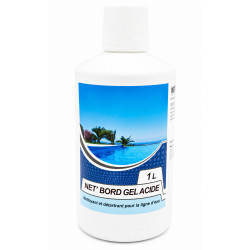
Accessories
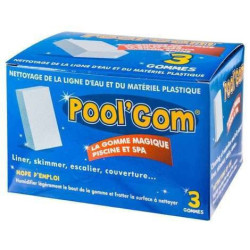
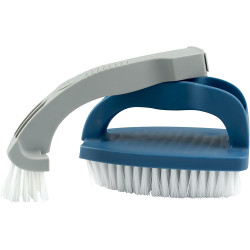
→ See all Maintenance equipment
Preventing limescale

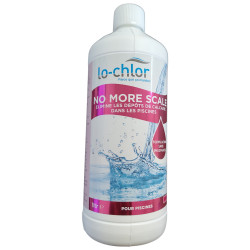
Frequently asked questions
What should I use to clean a liner waterline?
A sponge or soft cloth and a liner-safe waterline cleaner. No household products or scouring pads.
Can I use white vinegar or bleach on a liner?
It is not recommended: manufacturers only recommend cleaners designed for liners. Household products can damage the lacquer and upset the water balance.
Why is my waterline turning black or grey?
It is usually a mix of grease (sun cream, skin) and dust, sometimes limescale. Cleaning 2 to 3 times a week stops it from building up.
How do I remove limescale from the waterline?
With a liner-safe acid cleaner (descaling gel), applied occasionally with a sponge, then rinsed. To stop it coming back, use a limescale sequestrant.
Should I lower the water level to clean the waterline?
It is not essential but it is easier. Lower it by just a few centimetres and never empty the pool.